

The Rugby Fives Association
October 2024
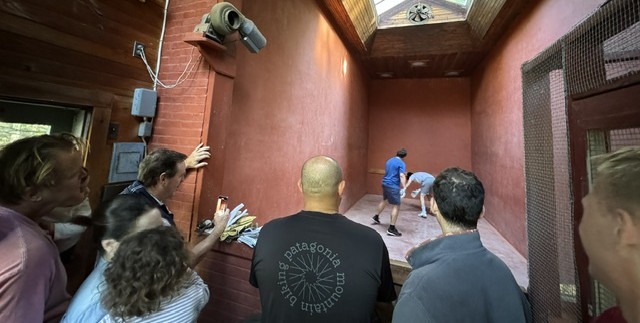
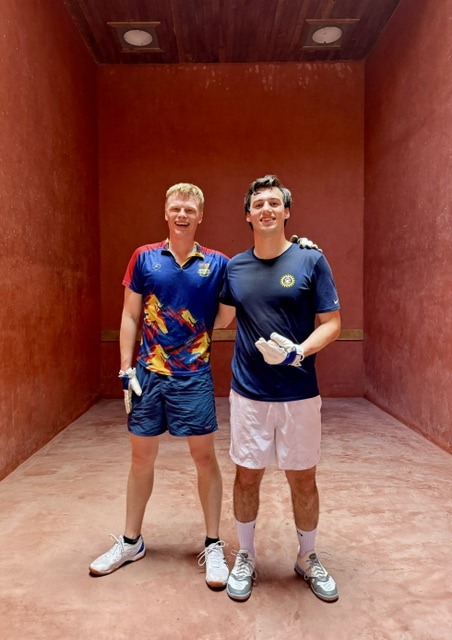
Competitive Rugby Fives has recently returned to the Fives courts in Maine for the first time in decades. Players were hosted by enthusiasts from Boston and a tournament was staged in order to commemorate the 100 year anniversary of the unique court. This is seen as exciting news for the small community of Fives lovers in the US, who are next hoping to do a trip to play on the block of courts at Groton School, Massachusetts.
See below the photographs for an account of a hundred years of Fives at Westways, Lake Kezar, Maine.
A century of fives in Maine – by Trevor Jones
October 2024
Rugby Fives has officially been played in Maine for 100 years!
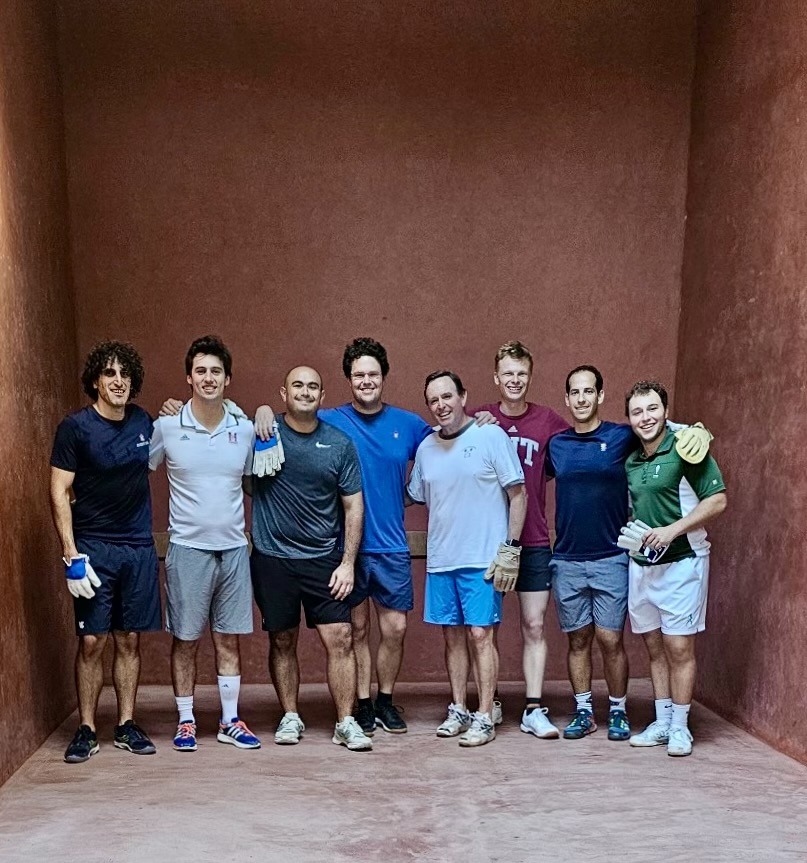
This weekend, Fives enthusiasts from Maine, Boston, and England marked the centennial anniversary of the Rugby Fives court at the Westways compound on Lake Kezar in Lovell, ME with an invitational tournament.
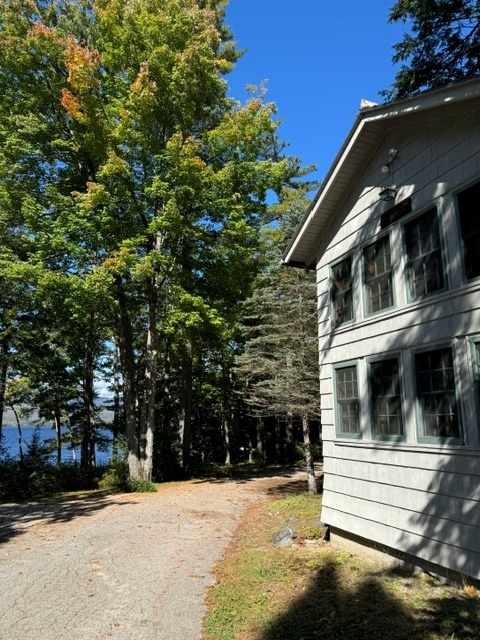
After the game was formally introduced to the United States in 1890 by Endicott Peabody, who built eight courts at Groton School in Massachusetts, the Maine court was built circa 1924-26 as part of the Westways corporate retreat for the Diamond Match Company under the direction of then-President, William Armstrong Fairburn, who hailed from England, and is presently owned by the Westways Association. To commemorate this most special of anniversaries, a small invitational tournament was organized 100 years later to ensure Fives play would live on in Lovell.
Neale Attenborough, a member of the Union Boat Club, who also owns abutting property around the lake, and his son-in-law, Nick Margitza, also a UBC member, generously invited and hosted a group of players up from Boston for the weekend. Aside from Nick and Neale having the odd practice session on the court every now and again, the court lies mostly dormant. Thus, this was confirmed to be the most play on the court in at least 50 years, if not longer.
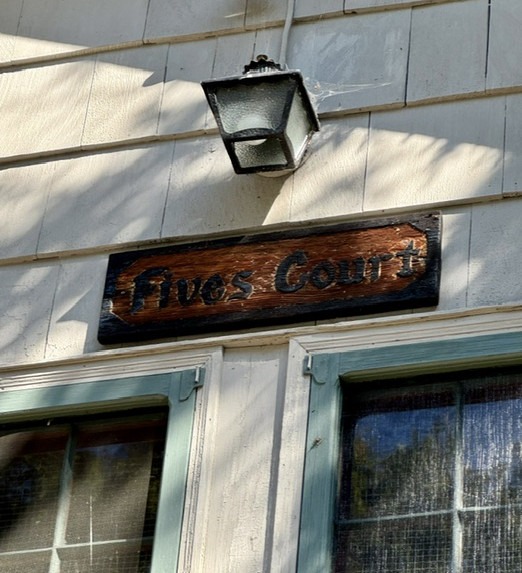
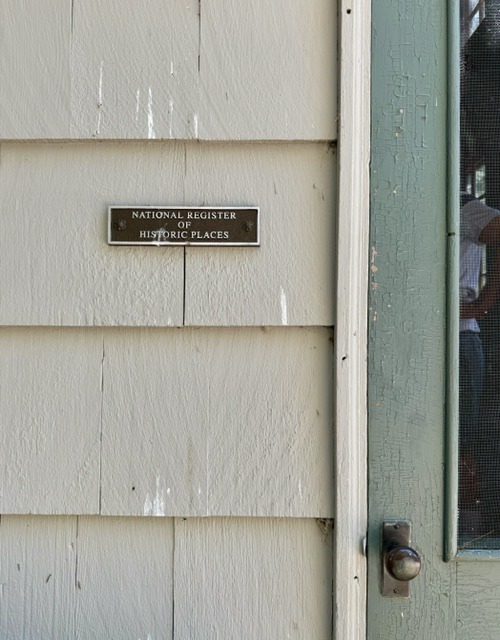
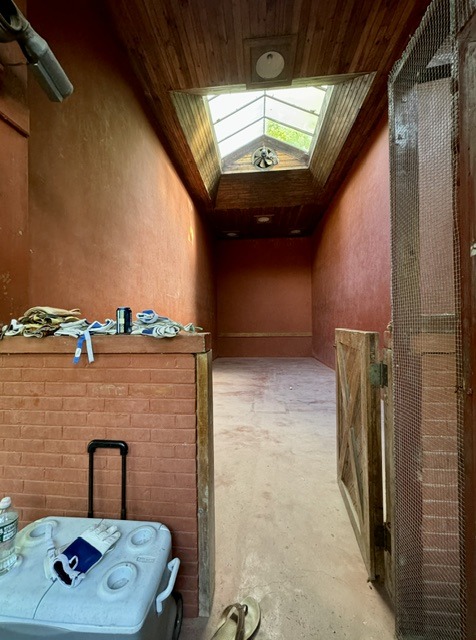
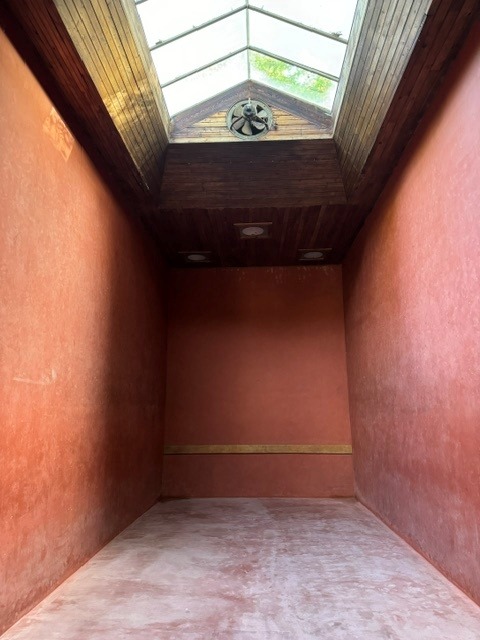
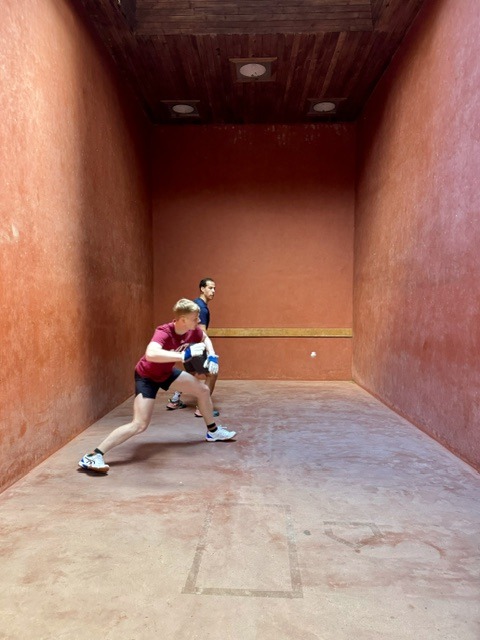
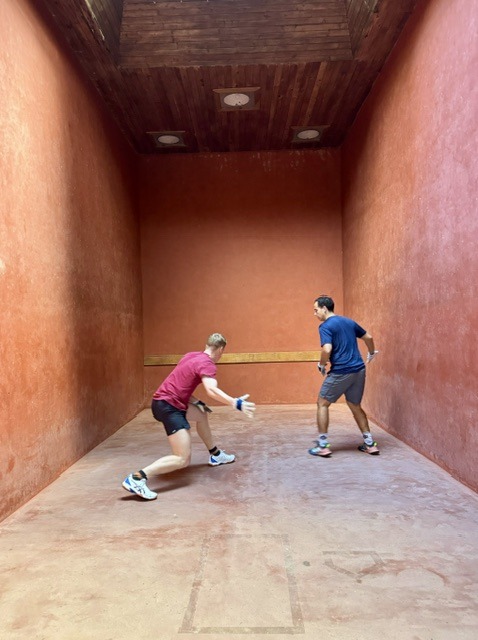
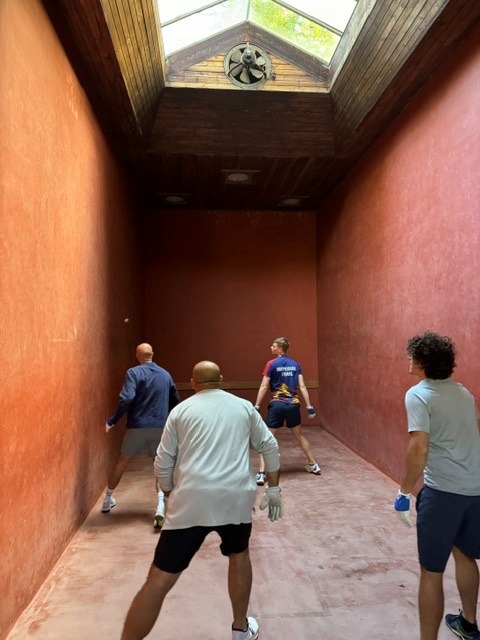
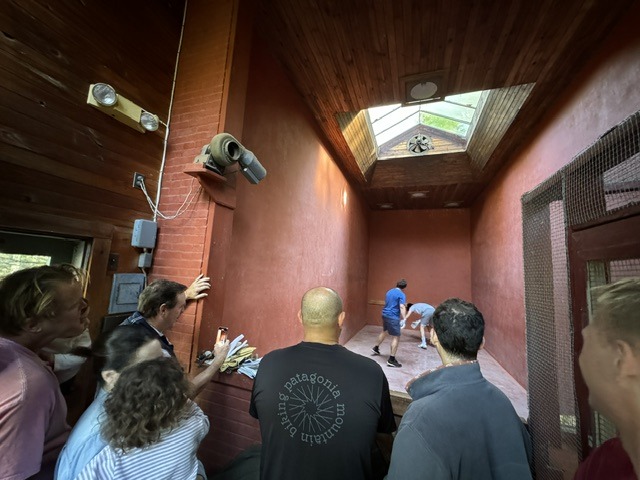
While the court may not be actively in use on a regular basis, it has remained in remarkable condition. The exterior of the building is in very strong shape, which only goes to highlight the incredible condition that the interior is in. Walking in, you will see a sign next to the door that notes this building is listed on the National Register of Historic Places (the application was sent in by David Woods in 2017), meaning it cannot be torn down or significantly altered. The viewing corridor behind the court is tight, and half of it is taken up by a very old heating system. There is a small back wall, probably about four feet tall, that has a saloon door that opens to the court. Once stepping foot on the court, the overwhelming sense one gets is RED, as the court is painted in a striking shade of vermillion, and the years have done nothing to wear down its vibrant hue.
For tournament play, rules were almost identical to those used at the Union Boat Club, with some slight variations. Games were played to increasing scores as the rounds went on (the first round went to 7 points, then 9, next 11, and 15 points in the final), with a significant variation being that players must win the game by two points. Servers have as many tosses as they need to get a good serve in, while receivers may decline as many tosses that are not to their liking as they choose; however, if the receiver takes a swing at the serve and misses it, they only have two more chances to return (or — in keeping with UBC traditions and if the server is feeling particularly gentlemanly — three more chances). Other than that, it’s Rugby Fives played as everyone knows it
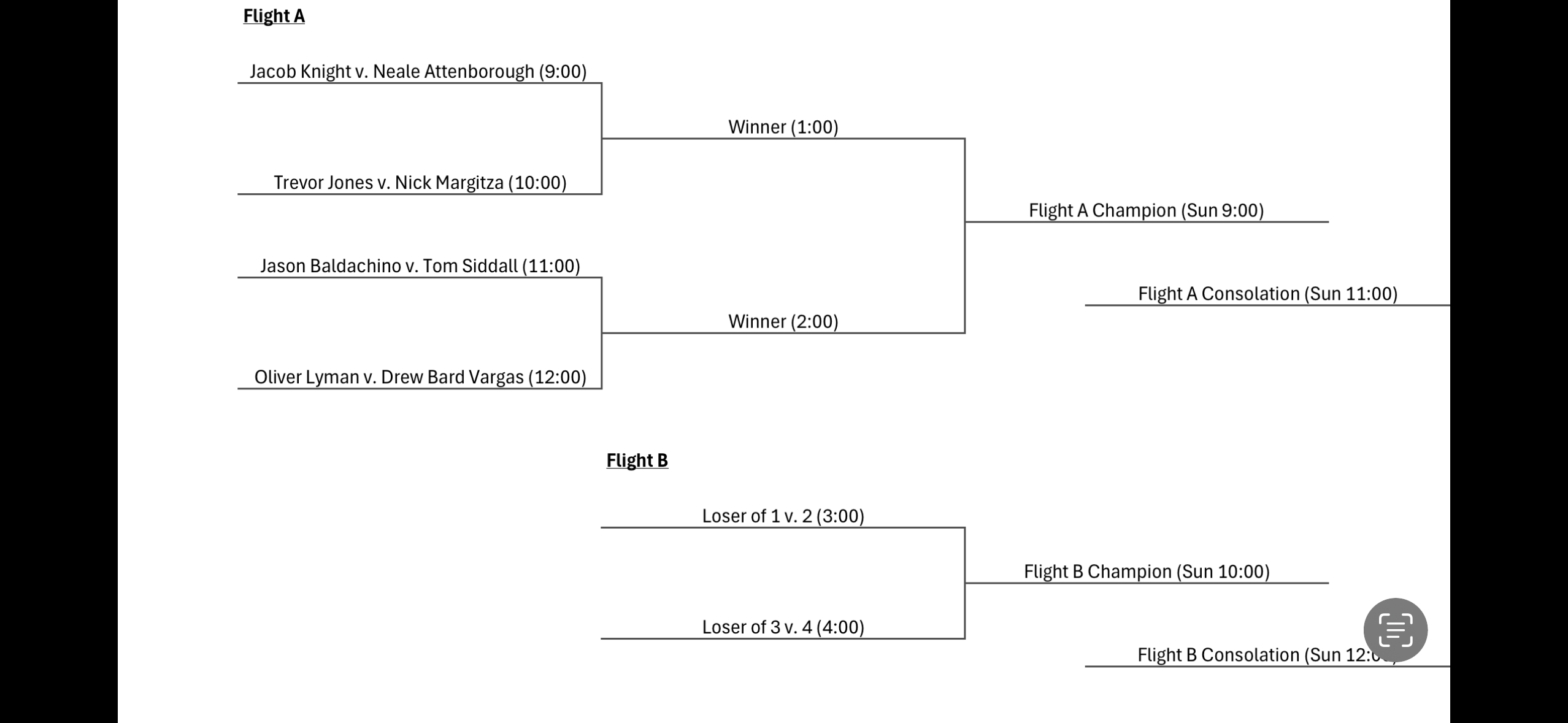
There was an eight-person draw, with losers of the first round moving into the “B Bracket”, and losers of that moving into the “B Consolation Bracket”, meaning everyone was guaranteed at least a couple of matches. The first rounds were pretty decisive, but as the draw advanced, quality of play enhanced. All rounds except for the final were played on Saturday, with the final being played Sunday morning. Some fun doubles took place early before the final to warm up the court (which was an interesting experience given how narrow the court is), and then it was time for the climax. The final was played first to 15, win by two, and was contested between Drew Bard, of the UBC in Boston, and Jacob Knight, an Eton Fives player out of Westway Sports Centre in London.
The match got off to a lopsided start, with Drew racing out to a commanding lead. However, as play progressed and the rallies started to get longer and longer, Jacob did well to cut the lead down. Onlookers were treated to some marvelous points, and everyone watching was thoroughly enjoying the match (and loudly demonstrated it!). After being behind in points for most of the match, Jacob used the win-by-two format to his advantage, taking the first opportunity he got to turn a tied score into a leading score. His first lead of the match was also the first championship point opportunity. But the American had other ideas, hitting an excellent return to win back service. The next couple points were grueling, but Bard was able to hold his nerve and push balls deep into the court, winning both of the drawn-out rallies, thus securing the match 16-14 and winning the tournament. Both men demonstrated impressive play and were generous with lets, making it a truly amiable affair.
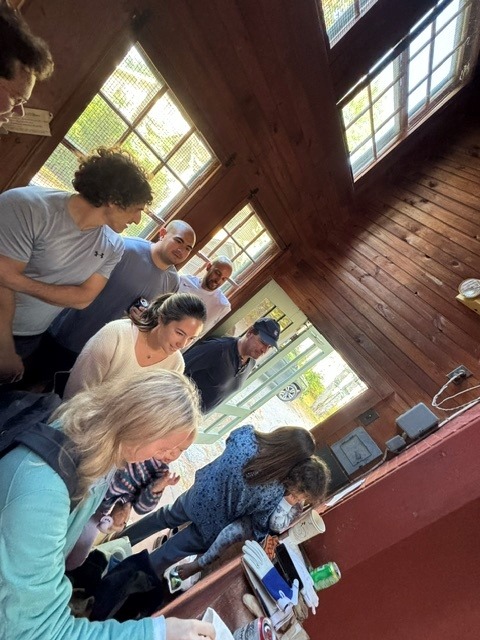
Impressively, the corridor behind the court was jam-packed with spectators for the final. Outside of the other players whose eyes were glued on the competition, family members — and even neighbors from around the Westways compound — came around to check out the action. Babies and dogs were in tow for the standing-room-only marquee affair, and onlookers were thrilled to see this building that has existed in their neighborhood for a century getting tons of use (even if they didn’t understand exactly what it was being used for).
As successful as the weekend was for Fives, it was just as successful for the extracurriculars. Friday kicked things off with a small cookout. Play was wrapped up on Saturday with lunch at Ebenezer’s Pub, which (oddly enough for this location, being dozens of miles in any direction from even a trace of cell service) has been voted Best Beer Bar in America and Best Beer Destination in the World multiple times over. Following that, we were treated to the famed “sauna run”, which includes spending 15-20 minutes inside the blaringly hot sauna at the Attenboroughs’ house, then sprinting 100 yards down to the lake to cool off. The evening concluded with a boat ride and another cookout. Most special, though, was the sunset sendoff: Neale dusted off his trumpet and treated us to a rendition of “Taps”, which was followed by Nick firing off the canon. It was a truly special way to cap off a wonderful weekend.
Neale Attenborough generously hosted everyone at his impressive 1908 lakefront estate, Garcelon. He and Nick Margitza both did so much, not just to organize and host this amazing tournament, but to ensure that the best possible time was had by all participants. A full recap of the weekend would not be complete with the utmost gratitude going to Neale and Nick. Thank you both for helping keep the sport of Fives alive in Maine!
If you are looking for more information on the history of the Maine court, you can read an in-depth article on it here: https://lovellhistoricalsociety.org/wp-content/uploads/2024/04/Winter-2024-1.pdf
And if you are looking for more information on the history of Fives in the US generally, you can read this: https://airmail.news/issues/2023-7-1/anyone-for-fives-anyone
October 2024